This Home Robot Just Mastered Stairs: Is Nowhere Safe From Bots?
Author:Tooba
Released:November 9, 2025
The world of home robotics just took another step forward. A new consumer robot with stair-climbing ability is driving fresh interest from buyers looking for assistants that move beyond flat floors. The real question is whether it’s worth buying and how it compares to existing options. This section looks at stair-capable robots, how they differ from standard home assistants, where they fit into daily use, and what buyers should consider before choosing one.
Best All-Terrain Home Robot: Dyson 360 Vis Nav
Dyson’s 360 Vis Nav isn’t marketed as a stair-climber, but it's one of the few vacuum bots on the market with adaptive navigation and advanced object recognition. For now, it won’t climb stairs, but Dyson has hinted at future iterations bridging that gap. What makes it relevant here is how well it handles split-level floors and tight navigation.
Strengths: Top-tier suction power, real-time mapping, wide-angle camera for full-room awareness
Best for: Multi-room apartments or homes where furniture and obstacles often change
Pricing: Around $1,200
Setup: App-based setup with Wi-Fi and firmware updates
Limitations: Not designed for stairs; users still need to carry it between floors
If you're not ready to buy a climbing robot just yet, this is a strong option for flat surfaces with complex layouts.
True Stair-Climbing Bot: Misty II By Misty Robotics
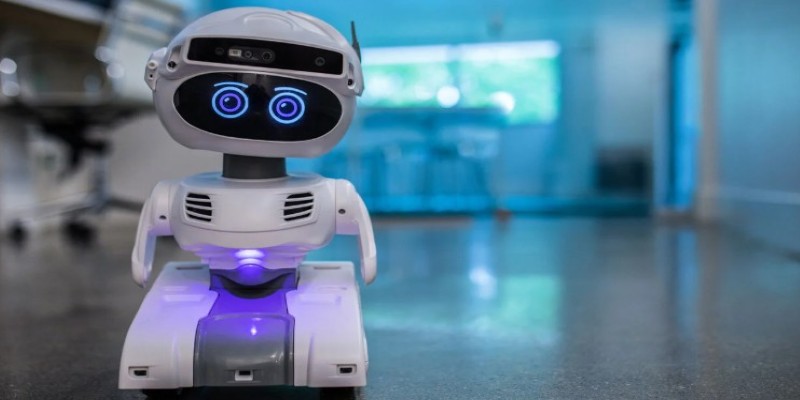
This is the headline maker. The Misty II has been upgraded to handle stair navigation using a combination of sensors and mobility adjustments. It’s not a vacuum or cleaning bot—it’s more of a programmable assistant with physical mobility.
Strengths: Navigates stairs, interacts using voice and facial recognition, and integrates with third-party APIs
Best for: Developers, educators, and tech-forward users looking for hands-on customization
Pricing: Around $2,900, depending on configuration
Setup: Requires some programming experience for advanced functionality
Limitations: Not an out-of-the-box productivity tool for most households
This isn’t a plug-and-play home helper. It’s for those looking to experiment or prototype robot assistants that move through real homes.
Delivery And Security Use: Temi Robot
Temi is a semi-autonomous robot designed for delivery, telepresence, and light concierge work. While it doesn’t handle stairs itself, recent third-party modifications have paired it with lifts or platforms that allow for multi-level navigation in business environments.
Strengths: Video calling, voice control, smooth indoor movement, object tracking
Best for: Offices, retail spaces, and homes where multi-level interaction can be managed externally
Pricing: Around $3,500
Setup: Wi-Fi setup, mobile app, optional SDK
Limitations: No built-in stair navigation; additional hardware needed for floor transitions
Temi isn’t cheap, but it fills a niche where mobility plus interactivity matter. Think of it as a mobile screen with intelligence rather than a physical helper.
Smart Surveillance On Wheels: Moorebot Scout
The Scout is a compact, AI-powered security robot that patrols your home, records footage, and recognizes pets and people. The latest version includes enhanced wheel suspension, allowing limited stair-edge detection and partial climbing on shallow inclines.
Strengths: Mobile surveillance, object recognition, compact size
Best for: Pet owners, parents, or anyone needing mobile home monitoring
Pricing: Around $200
Setup: App setup with Alexa and Google Assistant support
Limitations: Not a true stair climber; can only handle minor elevation changes
The Scout is a solid entry-level option for users interested in AI motion and security without investing in a full home bot.
Comparison: Stair-Capable Vs. Flat-Floor Robots
Stair-Capable Bots
Price Range: Typically between $2,500 and $5,000
Setup Complexity: Requires moderate to high setup effort, often involving coding or detailed configuration
Home Integration: Customizable for unique workflows, smart home setups, or advanced automation
Ideal User: Suited for developers, robotics enthusiasts, or professionals with technical experience
Primary Function: Often used for research, prototyping, or multifunctional utility rather than routine home chores
Mobility: Capable of moving across multiple levels and handling stairs or complex layouts
Flat-Floor Bots
Price Range: Starts around $150 and can go up to $1,500 for premium models
Setup Complexity: Typically low to medium; most units are ready out of the box with minimal configuration
Home Integration: Designed for general household use with plug-and-play simplicity
Ideal User: Families, renters, or anyone wanting basic automation without technical setup
Primary Function: Cleaning, light security, pet monitoring, and smart home assistance
Mobility: Limited to single-floor navigation; stairs remain a manual barrier
Stair-capable robots offer hands-free floor access but remain costly and complex. Flat-floor bots are more affordable, reliable, and practical for most current home setups.
Real Use Cases That Make A Difference
Elderly Care
In homes with elderly residents, a robot that can climb stairs might offer real benefit. But most current bots aren't certified for medical or emergency use, so expectations need to be grounded. What’s possible: scheduled check-ins, voice reminders, or video calls between floors.
Content Creation
Programmable robots like Misty II are being used to stage content or shoot walking shots without a human camera operator. You can set up a basic movement path and sync it with a camera for social media production.
Tech Support And Demonstration
Educators and product trainers use mobile robots to showcase technology in live environments. Being able to move room to room or floor to floor, even with stair aids, changes the flow of demo sessions.
Pet Monitoring
Flat-surface bots like Scout work best for users tracking pets. They can follow, film, or even interact with pets while you're away. A robot that can chase a cat upstairs? Not quite there yet.
What To Expect On Price And Availability?
Stair-climbing bots are not mass-market products yet. Most sit above $2,500, with some nearing $10,000 depending on use case. Availability is often limited to direct purchase or through specialty distributors.
In contrast, vacuums, surveillance bots, and mobile assistants without stair mobility range widely in price:
Budget cleaners: $150–$300 (e.g., Eufy, Roomba 600 series)
Mid-tier navigators: $400–$800 (e.g., Roborock S7)
Premium AI-integrated bots: $1,000–$1,500 (e.g., Dyson 360, Ecovacs T20)
Smart assistants with video/speakers: $2,000–$4,000 (e.g., Temi)
There’s also a growing trend of modular bots where stair-climbing is a planned future add-on. This means you may buy now and upgrade later—but check each brand’s roadmap before relying on that.
Bottom Line: Should You Buy Now Or Wait?
Unless you’re a developer or robotics enthusiast, it’s smarter to wait. Stair-climbing robots are still expensive, niche, and not ready for effortless home use. Most buyers will get better value from proven floor-level models. If mobility across levels is critical, watch for upcoming releases, but for now, standard bots remain the more practical and cost-effective choice.
Don't Miss
The Future Of Self-Driving Cars: How AI Makes Decisions For Safer Roads

How AI Helps You Create Better Content Online Today

The Dark Side Of AI: Privacy Risks You Should Know Today

How AI Is Changing The Future Of Freelancing: What Happens Next

AI In Fashion: How Brands Predict Trends Faster Than Ever